
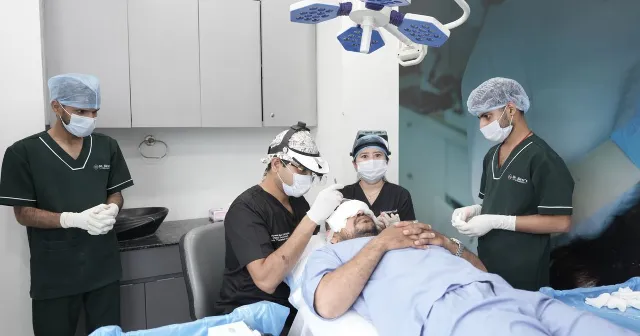
Hair loss affects more than appearance; for many people it also affects confidence. In men, the most common cause is androgenetic alopecia (male pattern baldness), driven by genetics and hormones. Medication can slow shedding, but where follicles are gone for good, a hair transplant is often the only permanent solution.
What Is a Hair Transplant?
A hair transplant is a surgical procedure that takes your own hair follicles (grafts) from one area and places them where hair has thinned or disappeared. Grafts are usually taken from the back of the head and above the ears. Follicles there are genetically resistant to DHT, the hormone behind pattern hair loss, and they keep that resistance after they are moved.
A single graft typically holds 1 to 4 hairs. The number of grafts per session depends on the size of the bald area and the capacity of the donor area; most procedures transplant between 1,500 and 4,000 grafts.
Who Is a Good Candidate?
The single most important requirement is a healthy donor area with enough hair. People who tend to get good results include:
- Men with pattern hair loss whose pattern has become clear
- People with sufficient hair density at the back of the head
- Those seeking eyebrow, beard or scar-area restoration
- Women with localised thinning (after a doctor's assessment)
Age alone does not decide candidacy. However, hair loss patterns are often not settled in younger patients, so specialists approach early surgery with caution. Active alopecia areata or diffuse shedding with an unknown cause should be treated first.
FUE, DHI and Sapphire FUE: What's the Difference?
The most widely used methods today extract follicles one by one. The main difference lies in how the grafts are placed into the recipient area.
Method --- How it works --- Key feature
FUE --- Follicles are extracted individually with a micromotor; channels are opened first, then grafts are placed. --- Suits large areas; the most widely used method
Sapphire FUE --- Same as FUE, but channels are opened with sapphire blades instead of steel. --- Aims for smaller, cleaner incisions
DHI --- Grafts are implanted with a Choi implanter pen, opening the channel and placing the graft in one step. --- Often chosen for adding density between existing hair and for small areas
FUT --- A thin strip of scalp is removed from the back of the head and divided into grafts. --- Yields many grafts but leaves a linear scar
The right method depends on the size of the area, your hair type and the condition of your donor area, and should be chosen with your surgeon. No single technique is “the best” for everyone.
What Happens on the Day of Surgery?
A hair transplant is performed under local anaesthesia and usually takes 6 to 8 hours. You stay awake throughout and can rest, listen to music or watch a film.
- Consultation and planning: The surgeon examines your donor area and designs the hairline and graft count around your facial features.
- Preparation: Blood tests are done and the treatment areas are prepared.
- Local anaesthesia: The donor and recipient areas are numbed; the injections are usually the only part you really feel.
- Graft extraction: Grafts are collected one by one and kept in a special storage solution.
- Channel opening and placement: Grafts are placed at the correct angle and direction for a natural look.
- Dressing and aftercare briefing: The donor area is bandaged and you receive your medication and care instructions.
Recovery: What Happens Month by Month
Patience is part of the result. A typical recovery timeline looks like this:
- First 3 days: Mild pain, tightness and forehead swelling are possible. The first wash is usually done at the clinic between day 1 and day 3.
- Days 7–14: Scabs in the recipient area fall away with regular washing, and redness fades.
- Weeks 2–6: Some transplanted hairs fall out. This “shock loss” is normal; the follicles stay in place.
- Months 3–4: New hairs start to appear, thin and fine at first.
- Months 6–9: A clear change becomes visible as hairs thicken.
- Months 12–18: The final result emerges; the crown may take a little longer.
Aftercare: What to Keep in Mind
- Sleep with your head slightly raised for the first few nights, and don't touch or scratch the grafts.
- Wash exactly as your clinic shows you, without rubbing the recipient area.
- Avoid strenuous exercise and heavy sweating for at least 2 weeks. Swimming pools, the sea and saunas usually need about a month.
- Protect the recipient area from direct sun for the first month and avoid tight hats.
- Smoking and alcohol can slow healing, so it's best to pause them before and after surgery.
- If your doctor recommends it, continue medication to protect your existing hair. Transplanted hair is permanent, but untreated native hair may keep thinning.
Possible Risks and Side Effects
In experienced hands a hair transplant is a safe procedure, but like any surgery it carries some risks. The most common are temporary swelling, redness, numbness and itching in the donor area.
Less often, patients may experience folliculitis (inflamed follicles), infection, poor graft survival or an unnatural hairline. Taking more grafts than the donor area can supply may cause permanent thinning at the back of the head. Careful planning and an experienced team greatly reduce most of these risks.
How to Choose the Right Clinic
The team's experience shapes the outcome far more than the name of the technique. Get clear answers to these questions before you book:
- Who designs the hairline and opens the channels? Is the surgeon personally involved in the critical steps?
- How many patients are operated on the same day?
- Can I see real 12-month results from patients with a similar hair type?
- Is the planned graft count realistic for my donor area?
- How are follow-up visits and post-op communication handled?
Very low prices and promises of “unlimited grafts” are warning signs.
Frequently Asked Questions
Does a hair transplant hurt? The procedure is done under local anaesthesia, so you shouldn't feel pain. Expect brief discomfort during the injections and mild soreness for a few days afterwards.
Is transplanted hair permanent? Yes. Follicles from the donor area resist shedding, so they generally stay permanent in their new location.
When can I go back to work? Most people with desk jobs return within 3 to 5 days. Physically demanding jobs may need more time.
Can women have a hair transplant? Yes. Women with a suitable donor area and a defined thinning pattern can get good results, but the cause of hair loss should be investigated first.
Conclusion
When the right candidate meets an experienced team, a hair transplant delivers natural, lasting results. Talking to a specialist before you decide helps you set realistic expectations and a clear timeline.
This article is for information only and does not replace a medical examination. Consult a qualified specialist to find the right treatment for you.